Why does the same health technology transform care for one patient but fail to connect with another? Rachel Tunis pursued that question throughout her Ph.D. at UT Information (iSchool), examining how people’s lived experiences with chronic illness shape the way they engage with technology. Her research brought information science into conversation with nursing, medicine and technology design, producing insights relevant both to healthcare practitioners and to those building the next generation of digital health tools. Tunis’s work reflects the possibilities of an iSchool Ph.D.: the freedom to approach complex human problems from multiple perspectives, collaborate with experts across UT and pursue research with meaningful real-world applications.
From Research Questions to Real-World Impact
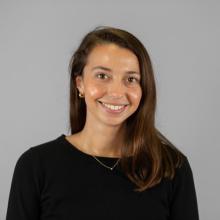
Tunis's dissertation asked how health tech supports people managing chronic conditions, and how the emotional experience of illness shapes whether people use those technologies at all. "I focused on the psychosocial and emotional experience of living with chronic conditions," she says. “I tried to understand both how these factors impact engagement with health technologies, and how health technologies in turn impact health behaviors and outcomes.”
Tunis’s first study drew on a trial led by Kavita Radhakrishnan in the UT School of Nursing, under whom Tunis worked as a graduate research assistant. The trial tested a digital health intervention aimed at helping adults with heart failure manage their condition day to day. Analyzing that trial's data, Tunis and her collaborators identified three psychosocial phenotypes — Engaged Self-Regulators, Activated Learners and Challenged Survivors — each with a distinct pattern of engagement with the technology.
Her second study took a more qualitative approach. Tunis ran a ten-day diary study with adults managing Type 2 Diabetes who regularly relied on health technologies as part of their self-care, tracking what worked and what didn't. Her findings informed a set of design mock-ups aimed at the unmet needs of her participants.
Building a Broad Base at the iSchool
Tunis credits her advisor, Ken Fleischmann, along with dissertation committee members Angela Smith and Elliott Hauser, for mentorship. Above all, she is grateful for the variety of her early coursework at the iSchool, which gave her the tools to build a unique research project.
“Like many iSchoolers, my work used mixed methods and drew from a variety of disciplines, so I appreciated having the chance to hone my skills across a variety of methodologies, including qualitative, quantitative and design-focused courses,” she says.
Advice for the Next Generation
Tunis's advice to prospective Ph.D. students starts with the iSchool's biggest asset: how many directions it can take you. "The iSchool is very interdisciplinary, so it's important to talk to current students and potential faculty mentors and make sure you feel there is a space or a team here that aligns with your goals," she says. “Certainly, keep an open mind to collaboration opportunities in different departments or schools.”
That said, she doesn't think students need to arrive with a research identity fully formed. Having some sense of what part of the field pulls at you helps, she says, but it’s okay to remain flexible well past the first year.
A Bigger Tent
Tunis finished her degree as the iSchool moved into UT's new School of Computing, alongside computer science, data science and statistics. She sees it as an opportunity for the information field to get better at advocating for itself. "There is definitely a unique role for iSchool students that fits well within the School of Computing umbrella," she says, "but I think at times we could do a better job communicating clearly and effectively about our skills and what we bring to the table."
Most people no longer need convincing that human, social and ethical questions must be considered as technology is developed, she argues, and she hopes the iSchool community takes advantage of that growing recognition.