This August, the iSchool is excited to welcome assistant professors Chan Young Park and Jiaxin Pei, whose research is helping shape the next generation of AI. The two recent hires have different specific areas of expertise, but both reflect the collaborative, interdisciplinary future students can expect to encounter at the iSchool, where AI, technology and human impact come together in the classroom and the lab.
Chan Young Park: Aligning AI with Diverse Human Values
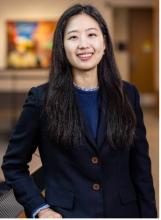
Chan Young Park explores how large language models can better reflect the values, cultures and needs of the people who use them. “Most alignment today optimizes for the preferences of an ‘average’ human,” Park says. “But there is no average human. My work asks how we can instead align models to the specific communities, cultures and individuals they actually serve.”
After earning her Ph.D. from Carnegie Mellon University, Park continued her research at the University of Washington before joining Microsoft Research’s AI Interaction and Learning team. ValueScope, a project that exemplifies Park’s broader research agenda, aims to turn implicit social norms, which are often difficult to articulate directly, into explicit, quantifiable signals that can inform AI alignment. To do so, she employs a sociological framework known as the “return potential model,” which describes how community approval changes with the degree of a behavior, identifying both the level a community prefers and how strongly it discourages deviations from that norm.
ValueScope helps identify the norms of a particular community by analyzing how people react to different behaviors online. Using community reactions such as upvotes and downvotes as training signals, the researchers train reward models that estimate how much a community values a certain behavior and how firmly the corresponding norm is enforced.
“What I found most striking was how dynamic and context-dependent these norms turned out to be. Around the 2020 U.S. election, for instance, communities on both sides of the political spectrum came to value humor and supportiveness more highly, then drifted back afterward,” Park says.
ValueScope’s insights could help AI systems respond more appropriately in different cultural or social contexts, improve online moderation, or anticipate how different groups perceive messages. That broader agenda also includes ComPO, which uses community preferences to personalize language models; PrefPalette, which models the latent attributes behind those preferences; and Modular Pluralism, in which multiple models collaborate to represent multiple perspectives.
Jiaxin Pei: Emerging Challenges in Human Use of AI
Pei, who earned his Ph.D. from the University of Michigan and completed a postdoctoral fellowship at Stanford’s Institute for Human-Centered AI, arrives at the iSchool with expertise in large language models and the social questions they raise. “We’re trying to think about the future of society with humans and AI agents, and about the societal issues involved when we’re deploying AI agents at a large scale,” he says.
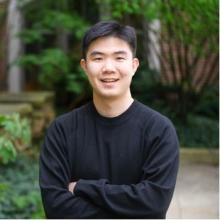
One of his most timely lines of inquiry concerns cost. As AI firms have felt pressure to show revenues, token costs have skyrocketed. Pei and his collaborators set out to study how coding agents spend tokens, whether spending more tokens produces better results and whether AI agents can accurately predict their own costs before tackling a task. The findings were striking.
“Token usage is highly variable, and the tasks that consume more tokens don’t necessarily have better performance,” Pei says. He also found that AI agents struggle to forecast what a given task will cost. “The prediction performance is just really bad,” he says. A follow-on project aims to train models to operate budget-consciously.
A second thread in Pei’s research asks the question: When a company deploys an AI agent to interact with users, whom does the agent actually serve? His team examined system prompts across a wide range of commercial deployments and found troubling patterns. “A lot of the system prompts in commercial AI systems contain problematic instructions that go against users’ interests,” Pei said.
Examples include models instructed to over-collect personal information, to falsely present themselves as human or to generate content users would find harmful. This research underscores a structural tension in the AI marketplace. The entity that builds and pays for an AI agent may have incentives very different from those of the person the agent is ostensibly helping.
Immediate Impact at the iSchool
This fall, Pei looks forward to launching a new course: “Building Large Language Model Applications.” Modeled on a startup accelerator, it challenges students to go from idea to a functional, investor-ready AI product over fifteen weeks. Pei developed the concept during his time in the Bay Area and sees it as a way to seed Austin’s expanding startup ecosystem. “We’re following the Y Combinator model, helping students launch their own product or even startups during fifteen weeks,” he says.
Park, meanwhile, will teach a new course on LLM post-training, a set of methods used after pretraining to shape models’ capabilities and alignment. She is also extending her work on aligning AI with human values into two new settings: multi-agent AI, where systems collaborate and represent individuals’ interests, and embodied AI. “As AI increasingly acts through robots and embodied agents, I want to understand how models can grasp and adhere to human norms and values in settings where the stakes of getting context wrong are much more concrete,” she says.
A New Home in the School of Computing
Park and Pei arrive at a pivotal moment for UT: the launch of the new School of Computing. Pei sees the new school as a timely response to the moment and expresses hope that it will bring researchers with different methodologies and frameworks into sustained collaboration.
Park agrees. “The School of Computing lowers the walls between fields that too often work separately,” she says. “Interdisciplinary collaboration is where my own research lives.”
Both note several areas across the School of Computing and beyond where they hope to plug in with colleagues. For Pei, that includes UT’s Natural Language Processing Group, the Texas Advanced Computing Center (TACC), the Oden Institute for Computational Engineering and Sciences and UT’s Machine Learning Laboratory.
Park is also excited to work with colleagues across UT’s natural language processing, human-centered AI, and robotics communities. “I’m getting the lay of the land, but the density of overlapping interests here is exactly what makes me optimistic,” she says.